The “Best Time” to Take a Probiotic May Be the Wrong First Question
Timing advice is easy to repeat and surprisingly hard to make universal.

Search results often offer one confident answer: morning, bedtime, empty stomach or with a meal. Probiotics are too diverse for a single timing rule. The most defensible starting point is the product label and the protocol used in relevant research.
Why timing can differ
Microorganisms vary in their tolerance of acid, oxygen, moisture and temperature. Formulations also differ: spores, delayed-release capsules, powders and food matrices do not behave identically. Instructions may be designed around those features.
With food or on an empty stomach?
Laboratory and formulation studies can generate hypotheses about survival, but they do not create a universal clinical rule. If a specific product was studied with meals, taking it under a different protocol makes the evidence less directly comparable.
Consistency is not the same as efficacy
Taking a product at a memorable time can improve adherence. That is useful, but consistency cannot make the wrong strain appropriate for a goal or correct an unclear label. First choose a defensible product; then build a routine around its directions.
- Read the serving and timing directions.
- Check refrigeration and moisture instructions.
- Review medication spacing with a pharmacist when relevant.
- Use the same routine during an evaluation period.
- Do not double a serving after forgetting one unless the label or clinician directs it.
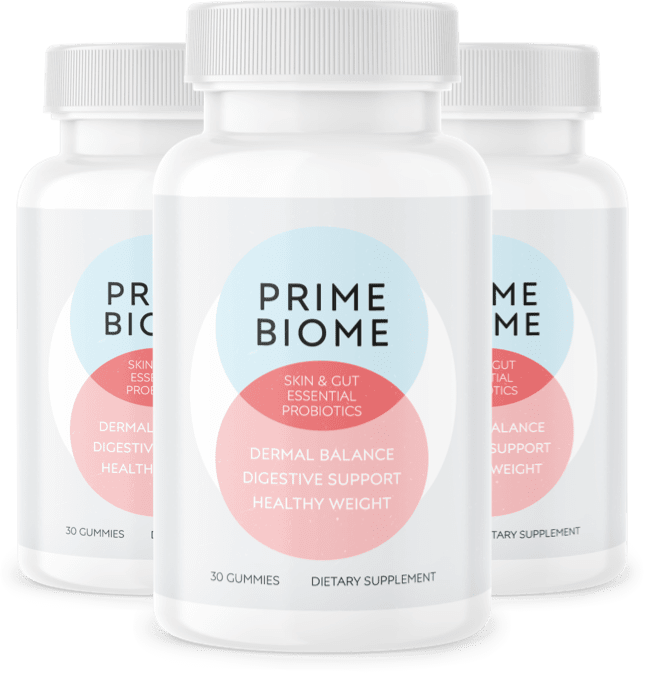
PrimeBiome is presented as a once-daily gummy
If considering it, use the current seller directions as the source for serving and timing—not a generic probiotic schedule.
Review the current label and offer