Fermented Food Is Not Automatically Probiotic—And a Probiotic Is Not a Replacement for Food
Yogurt, kimchi and sourdough all involve fermentation. They do not all deliver the same live organisms—or any live organisms at all.
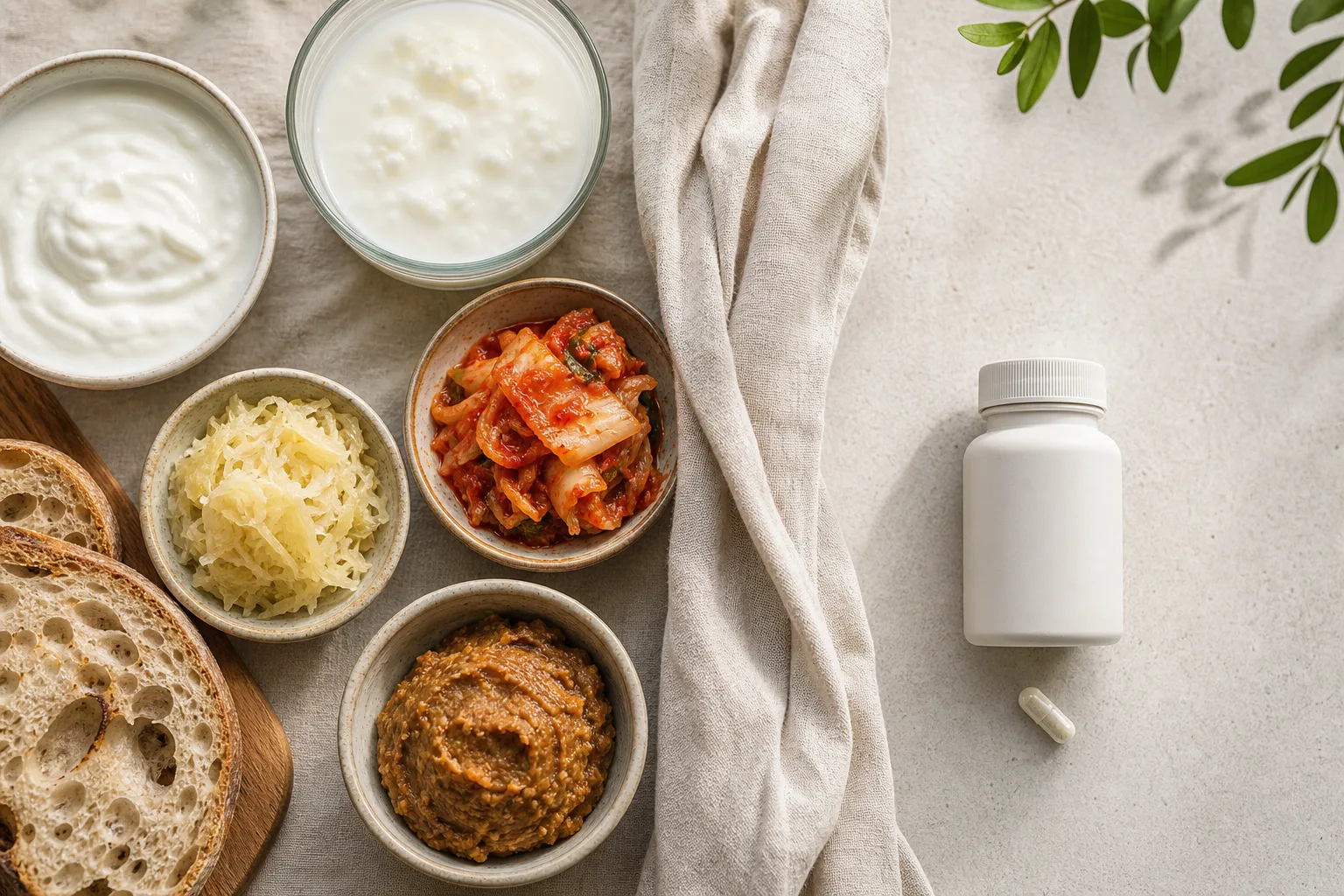
Fermentation is a process. Probiotic is a designation that requires live microorganisms, an adequate amount and a demonstrated benefit. Confusing the two turns a useful food category into an unearned health claim.
Why some fermented foods contain few live microbes
Baking, pasteurization and other processing can kill microorganisms used during fermentation. Sourdough bread is fermented, but baking changes what reaches the plate. Some shelf-stable pickles are heat treated. Other foods, such as certain yogurts and kefirs, may contain live cultures.
What food offers that a capsule does not
A fermented food can also provide protein, fiber, vitamins, minerals and compounds created during fermentation. A supplement can offer a more defined organism and amount when the label is specific. These are different strengths, not a universal ranking.
| Question | Fermented food | Probiotic supplement |
|---|---|---|
| Is it food? | Yes; contributes to the diet | No; intended to supplement the diet |
| Are microbes always alive? | No | Live probiotics should be viable as labeled |
| Is the strain always specified? | Often not | Better labels specify it |
| Does “fermented” prove a benefit? | No | Neither does the word “probiotic” alone |
Use the right question for the goal
If the goal is a varied diet, fermented foods can be considered alongside other nutritious foods. If the goal is an outcome studied with a named strain, a precisely labeled product may be easier to compare with the trial. A clinician or dietitian can help when symptoms, dietary restrictions or treatment are involved.