Prebiotic, Probiotic or Synbiotic? Three Similar Words, Three Different Jobs
One is a substrate, one is a live microorganism, and one combines the ideas. Marketing often blurs the boundary.

Prebiotic and probiotic differ by more than one letter. A probiotic is a live microorganism administered in an adequate amount to confer a health benefit. A prebiotic is a substrate selectively used by host microorganisms to confer a benefit. A synbiotic combines live microorganisms with a substrate.
| Term | What it refers to | Common label clue |
|---|---|---|
| Probiotic | Specific live microorganisms with demonstrated benefit | Genus, species, strain and CFUs |
| Prebiotic | A substrate used by host microorganisms | Inulin or certain oligosaccharides may appear |
| Synbiotic | A mixture of live microorganisms and substrate(s) | Both microbial and prebiotic components |
Fiber is not automatically a prebiotic
Many fibers are useful parts of a diet, but the technical definition of a prebiotic requires selective use by microorganisms and a health benefit. A package can use familiar gut-health language without demonstrating that every fiber meets that definition for the advertised outcome.
A combination is not automatically synergistic
Modern consensus distinguishes complementary combinations from formulations designed so a substrate supports the co-administered organism. Simply placing a probiotic and inulin in the same gummy does not prove that the pair works better together.
Questions for a combined formula
- Are the microorganism and substrate identified and quantified?
- Was the combination studied, or only the ingredients separately?
- Is “feeds good bacteria” being used as a vague substitute for an outcome?
- Could the added fermentable fiber cause digestive discomfort for this individual?
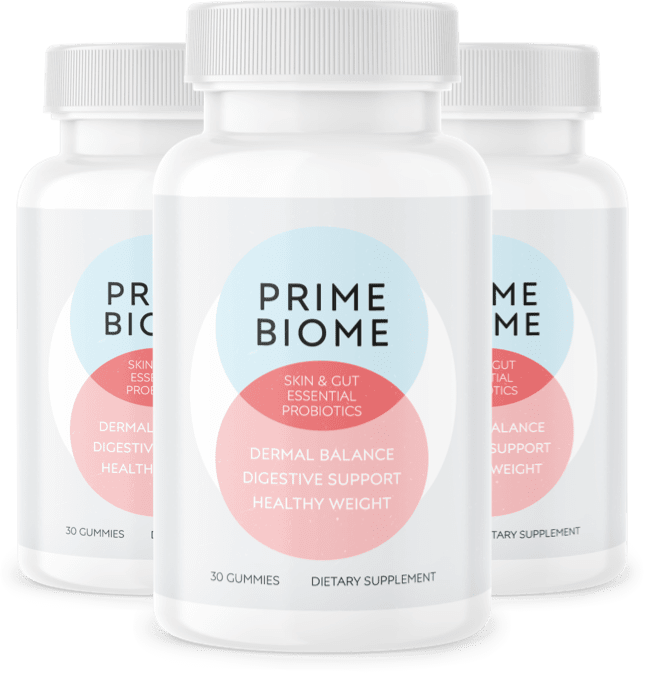
PrimeBiome combines B. coagulans with inulin
That makes the probiotic-plus-substrate distinction relevant, but the label and evidence should still be evaluated at the finished-formula level.
Review the current label and offer