What Changes in Your Gut After 50, and Why It Shows Up on Your Skin
Bloating by mid-afternoon and skin that went dull look like two separate problems. Researchers keep finding one line running between them.
Two things tend to turn up in the same decade, and almost nobody puts them side by side. There is the bloating that arrives by mid-afternoon regardless of what you ate, and mornings that stop being predictable. Then there is the mirror, and skin that went dull and papery no matter what got layered onto it. They look like unrelated problems. There is reasonable evidence they share one address, and it sits well below your face.
I am not going to promise you that a supplement fixes either one. What I can do is explain what researchers describe happening in the gut after middle age, why they keep finding a line between that and skin, and exactly what to look at on a probiotic label before spending money. Most bottles on the shelf do not survive those checks.
Skip ahead to the label and refund terms →
What shifts
Your gut holds trillions of bacteria, and the interesting question is which ones rather than how many. Over the decades the composition drifts. A 2021 analysis of more than 9,000 people found that from mid-to-late adulthood the gut microbiome becomes steadily more individual, and that the drift involves being depleted of the core species most adults share.
The second finding in that study is the one worth carrying around. The drift tracked health rather than birthdays. The people who kept changing were the healthier ones, and those who stayed anchored to the common pattern had poorer survival over the four years that followed. So the picture is messier than a slide downhill with age. It is a set of changes tangled up with how healthy someone already is.
A 2022 review in Nature Reviews Gastroenterology & Hepatology sets out where the field has reached. Some compositional changes track age, some track disease, and the two overlap. That review also discusses the promise of deliberately restoring organisms associated with healthier ageing, which is why this category of product exists and equally why nobody serious is promising you an outcome from it.
The everyday version is the part people recognise without needing a study. Meals that used to sit fine stop sitting fine. Mornings get harder to plan around. It creeps rather than arrives, which is why so few people connect it to anything.
The line between the gut and the skin
Here is the part that surprises people. The gut and the skin appear to talk to each other. Researchers call it the gut-skin axis, and it describes a two-way line of communication between the microbiome and the skin barrier.
The reasonable version of the claim is that supporting a more balanced gut environment may be reflected in skin over weeks and months. The version worth being suspicious of, wherever you see it, is that swallowing something clears skin or fixes a condition. It does not, and any seller worth trusting says so in their own fine print. These are supplements rather than drugs, and they are not intended to diagnose, treat, cure or prevent anything.
Keep that sentence handy. It is the fastest way to sort the useful pages from the rest.
Three things worth checking on the label
This is where most probiotics quietly fall apart, and it is the part I would spend two minutes on before spending forty dollars. The number on the front of the bottle, the fifty billion or the hundred billion, is not a quality score. The NIH's own guidance is blunt that a higher count does not necessarily mean a better product.
1. Is the strain named?
You want a specific organism you can look up, written out properly, rather than a "proprietary blend" that tells you nothing. Bacillus coagulans is an example of a named one. If the label will not tell you what is in it, that is the answer.
2. Will it survive the trip?
Stomach acid destroys a good deal of what you swallow. Spore-forming organisms carry a protective coat, which is the whole reason formulators reach for them, and it means more of the dose should reach the gut intact than with a fragile strain.
3. Is there anything to feed it?
Bacteria that arrive with nothing to eat do not do much. A prebiotic fiber such as inulin gives them something to work with. A probiotic packaged with the fiber that feeds it is called a synbiotic, and it treats the gut as a system instead of dropping organisms in and hoping.
Three checks, two minutes, and it rules out a surprising amount of what is sold. What a label cannot prove from a distance is the quality and amount behind each line, so read the current panel yourself rather than taking anyone's summary of it.
Check a current label against these three →
How long any of this takes
Longer than anyone selling it wants to say. The word that keeps coming back in gut-health communities is patience. One person put the whole category well: "probiotics helped my skin a ton, but it took like 3 months to really see the difference."
Weeks to a few months of taking it daily, alongside the ordinary things that also matter, is the realistic expectation. Anyone promising faster than that is selling. We quote community discussion here and we do not run personal testimonials or invent them.
What it will not do
Worth saying plainly, because the pages that skip this part are the ones to close. A probiotic is not a treatment for any digestive or skin condition. It will not replace a doctor for something that needs one. It will not work overnight, and for some people it will not do anything noticeable at all, which is the reason a refund window matters more than any claim on the box.
If you are pregnant, immunocompromised, or taking prescription medication, talk to your doctor before starting anything new. That goes double if you are on several. This page is educational information and not medical advice.
The formula we ran these checks against
We graded one current formula against the three checks above and it cleared all of them on shape: a named spore-forming strain, a reason to expect it to survive the trip, and a prebiotic fiber included to feed it. It also carries a 60-day money-back period from the seller, which turns a first bottle into a test rather than a bet. Read the current label, the doses and the exact refund terms on the official page before deciding anything.
See the current label & 60-day refund terms →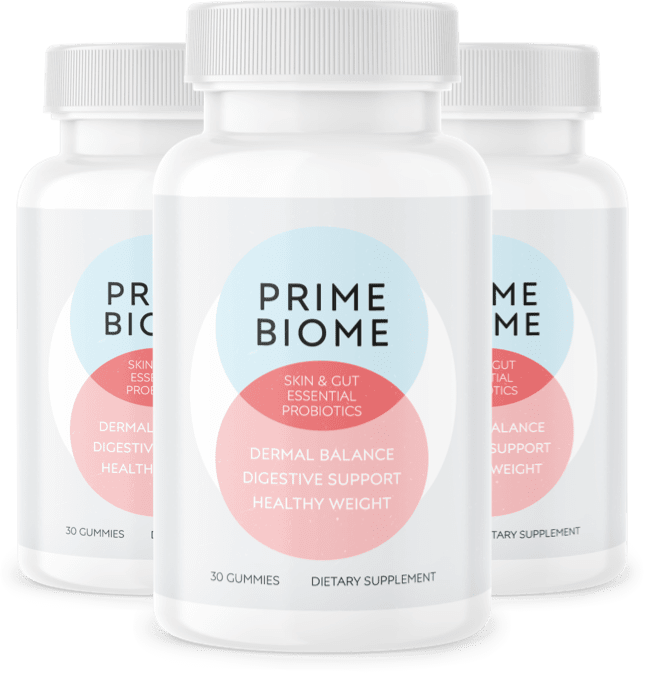
Who should not bother
Skip it if you want something to work by the weekend. Skip it if you are expecting it to stand in for a doctor on something that has been going on a long time and getting worse. And skip it if you already know you will not take it daily, because consistency is most of what makes any of this work and there is no probiotic that performs for someone who remembers it twice a week.
It is worth a look if the label logic above makes sense to you, you will give it a genuine two-month run, and a refund window is what you needed to stop deliberating.
Common questions
How long before anything changes?
Community reports describe weeks to a few months of daily use. Anyone promising an overnight change is not being straight with you.
Can you take a probiotic alongside prescription medication?
Ask your doctor or pharmacist, particularly if you take several. Probiotics are generally well tolerated by healthy adults, but medication interactions are a question for someone who can see your full list, and it is a two-minute conversation.
Does it need refrigerating?
Spore-forming strains are chosen partly because they are more stable at room temperature than fragile ones. Check the current packaging for storage instructions, since it varies by product.
Where should you buy it?
Through the official page, so the 60-day guarantee and current pricing apply. Verify the refund window and its terms at checkout before ordering.
- NIH Office of Dietary Supplements: Probiotics (Health Professional Fact Sheet)
- NCCIH: Probiotics (Usefulness and Safety)
- The Role of Probiotics in Skin Health and the Gut–Skin Axis: A Review
- Wilmanski et al., Nature Metabolism (2021): Gut microbiome pattern reflects healthy ageing and predicts survival in humans
- Ghosh, Shanahan & O'Toole, Nature Reviews Gastroenterology & Hepatology (2022): The gut microbiome as a modulator of healthy ageing