What People Try for Adult Breakouts, Ranked — Worst to Most Repeatable
I read hundreds of Reddit threads so you don’t have to. Here’s the honest version — the good, the overrated, and the one people keep quietly landing on.

I found it at 1am, buried in r/Supplements — the corner of Reddit where people go to ask the questions their dermatologist waved off. Someone had posted the exact thing I’d been quietly Googling for months: "I’ve struggled with gut and skin health on and off for most of my life, and it’s hard to know what the actual cause is." Two hundred comments under it. So I went down the hole — r/Supplements, r/Microbiome, every "what finally helped your skin" thread I could find, hundreds of them. And the same few answers kept surfacing, always with the same quiet ending: people get to the part where they actually have to pick something, get overwhelmed, and buy nothing. So I ranked them — worst to best, the way a friend would, with the catch nobody puts in the marketing. None of this is a cure, and nothing here is magic. But some answers are a lot more repeatable than others.
Just here for the #1 pick? Jump to it →
5 · The newest serum or cleanser
Verdict: most-bought, most-abandoned
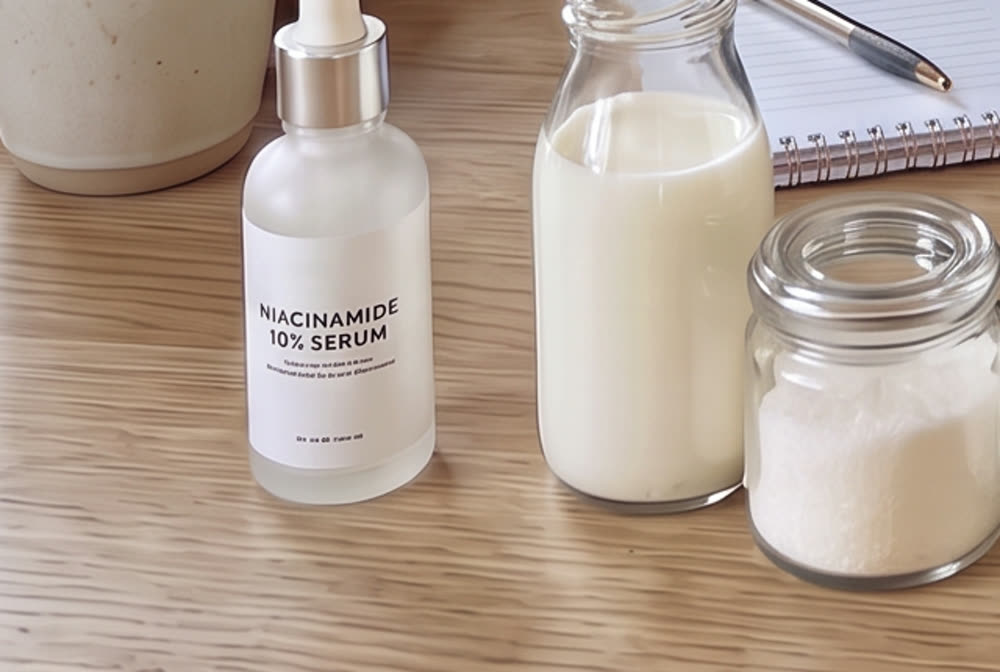
This is where almost everyone starts, me included, because it's the easiest thing to buy at 1am. A new cleanser, a new serum, whatever ingredient the internet is excited about that week. And look — a good topical can genuinely help the surface. The reason it lands dead last isn't that it does nothing. It's that if you open most people's bathroom drawers, you'll find a small graveyard of half-used bottles, each one abandoned after three weeks. As one person put it, they'd tried "any fancy skin supplement" going and a basic approach still did more. If the thing actually driving your breakouts is happening on the inside, a product that only ever touches the outside can't reach it — and you'll have spent the most for the least.
4 · Cutting sugar and dairy
Verdict: the one nobody wants to hear
This is the answer people literally groan at, and it's also one of the most repeated lines in every one of those r/Supplements threads. It costs nothing, which is rare on this list. And person after person says the same thing: when they actually stuck with it, it mattered. One woman summed the whole ranking up by accident — "cutting dairy made a huge difference for both, but that's not a supplement lol." The problem is obvious. It's hard. Brutally hard. As someone else said, "sugar is the hardest for me, it feels like it's in everything and is truly addictive." Huge potential, low follow-through — which is exactly why it sits mid-pack instead of at the top.
3 · Fermented foods — kefir, kimchi, yogurt
Verdict: the community's favorite starting point
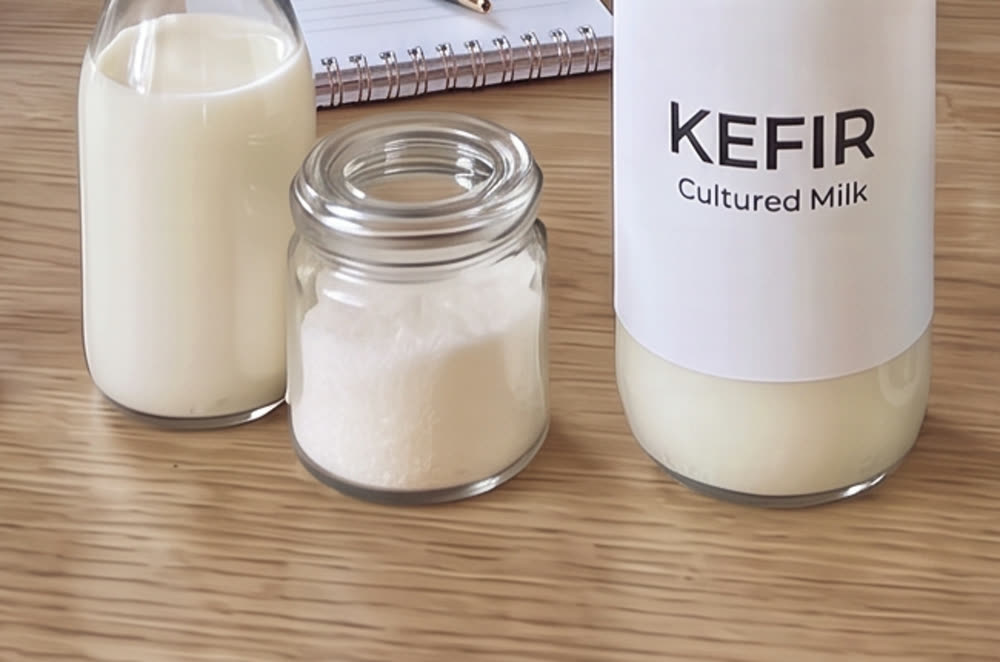
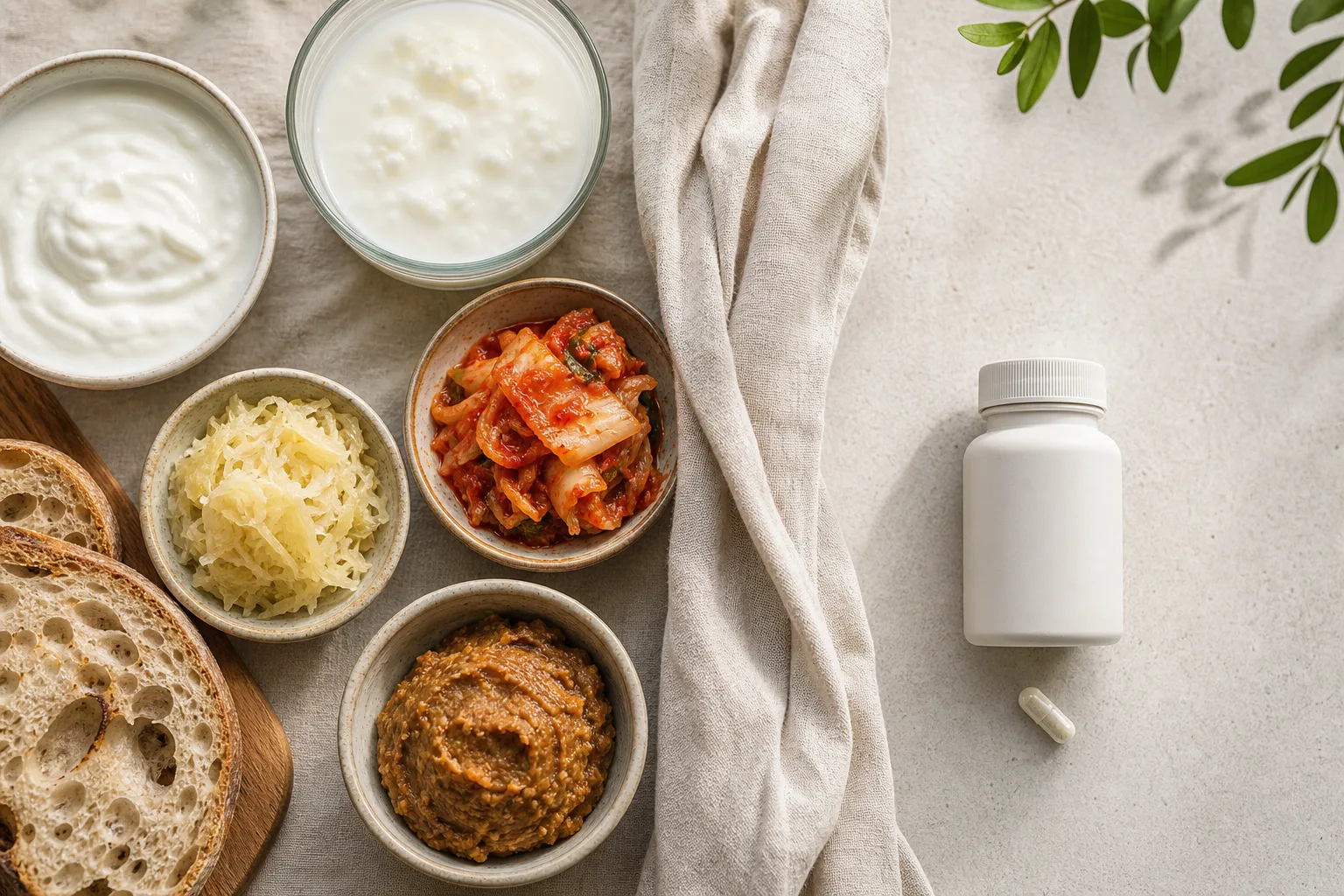
Fermented foods are the wholesome answer everyone feels good recommending, and honestly, for good reason: real food, low cost, a gentle way to even start thinking about your gut. "Kefir first thing in the morning" comes up constantly. If you're going to experiment, it's a lovely place to begin. The honest downside people mention is that it's slow and inconsistent — you're getting whatever bacteria happened to be in that batch, in amounts you can't see, so two people "doing the same thing" can have completely different weeks. It's a good habit. It's just not a controlled one.
2 · A random drugstore probiotic
Verdict: the coin flip
Eventually a lot of people decide to "just try a probiotic," walk into a pharmacy, and reach for the bottle with the biggest number on the front. And this — this is where the most people quietly give up. Not because probiotics don't belong on the list, but because of the single most relatable line I found in all of it: "how do you know which probiotic to take? I always get confused looking into it and then just don't end up buying anything." That's the whole trap. A bottle that only says "probiotic blend, 50 billion" tells you almost nothing. Sometimes it helps. Often it doesn't. And because you can't tell what you took, you can't repeat it or rule it out. It's a coin flip you paid for.

1 · Targeted, named strains — taken consistently
Verdict: the most repeatable answer
Here's where the people who've actually been at this a while keep landing. Not a mystery blend — specific, named strains, taken consistently, usually alongside the boring diet basics. One comment stuck with me because it's the quiet upgrade from the coin flip above: "a basic multi-strain probiotic did more than any fancy skin supplement I tried… labels can be misleading, so I sanity-check the strains and doses." That's the whole thing. The appeal isn't hype — it's that you actually know what you're taking, which means if it helps you can keep doing it, and if it doesn't you can cross it off and move on. Nobody honest calls it fast. The reports that ring true describe weeks to months — one person said flatly, "it took like 3 months to really see a difference." But of everything on this list, it's the one people describe being able to repeat. And that's the whole game.
See the example people keep asking about →
How to read a probiotic label properly
The entire difference between the #2 coin flip and the #1 repeatable answer is on the back of the bottle. Three quick checks separate a product that was built seriously from one coasting on a big front-of-label number. We broke these down fully in the three-check label guide, but the short form:
- Named strain? Full genus, species and the strain code you can actually look up — not just "probiotic blend."
- Survivability? A spore-forming organism like Bacillus coagulans, or some stated reason it survives digestion.
- Support? A prebiotic or fiber that feeds the bacteria, so you're treating the gut as a system — the idea behind synbiotics.
A label that answers all three was built by someone paying attention. One that answers none is the coin flip in a nicer box.
Running the three checks on PrimeBiome
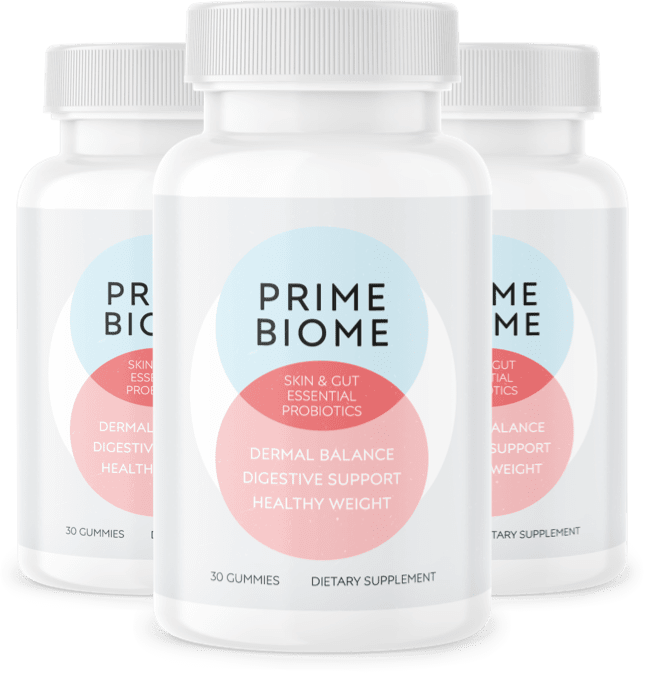
Since it's the one that comes up most when people ask "okay, so which one" — PrimeBiome's public page lists B. coagulans (a spore-forming organism) alongside inulin, a prebiotic fiber, plus botanicals. So it clears the shape of all three checks. What it can't do from here is prove itself to you, and I'm not going to pretend otherwise: verify the current strain code, the amounts, and the seller's advertised 60-day money-back guarantee on the label yourself before you decide. Whatever you land on, make sure it has a real guarantee — that's the one rule I'd never skip.
See PrimeBiome's full label & 60-day-refund offer →